Sales: (833) 984-3200
Parts & Service: (418) 833-3200

Sales: (833) 984-3200
Parts & Service: (418) 833-3200
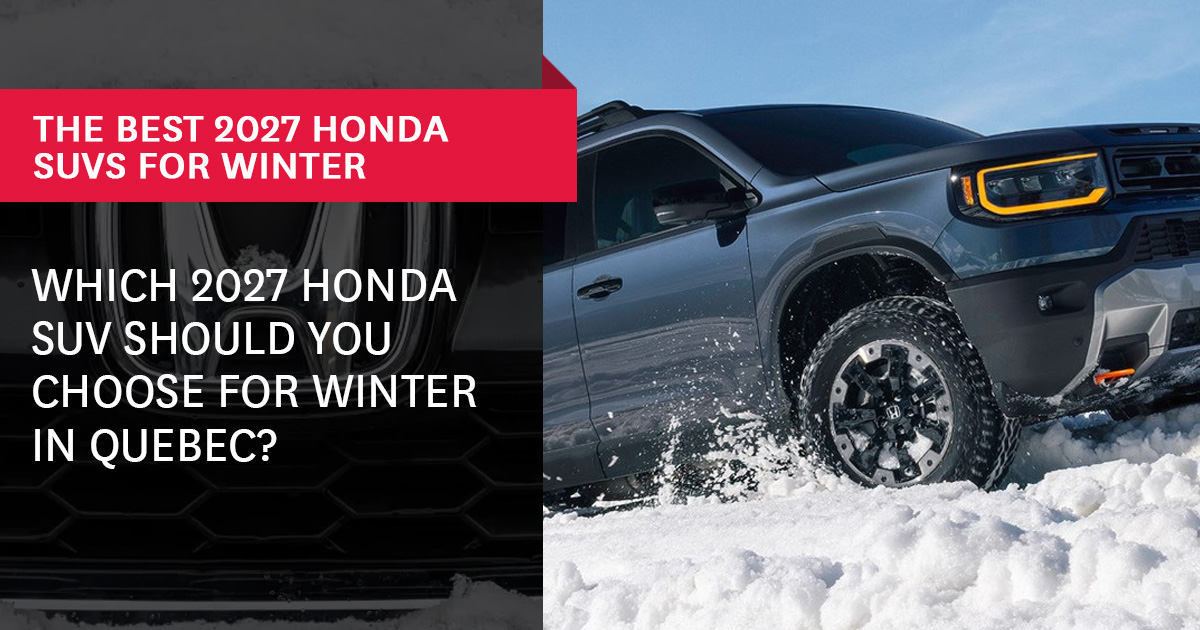
Quebec winters put vehicles to the test. Between heavy snowfall, icy roads, sub-zero temperatures and daily driving on roads that can sometimes be difficult, choosing an SUV suited to our climate becomes a priority. For drivers in Lévis and the greater Quebec City area, Honda offers four models that meet different needs: the 2027 Honda HR-V, 2027 Honda CR-V, 2027 Honda Passport and 2027 Honda Pilot.
These four Honda SUVs differ in size, powertrain, cargo capacity and technology. The HR-V prioritizes manoeuvrability and fuel economy, the CR-V focuses on family versatility and the efficiency of its hybrid powertrain, the Passport stands out for its off-road capability, while the Pilot is aimed primarily at families looking for three rows of seating.
But which one is best suited to Quebec winter conditions? To answer that question, you need to look beyond the presence of all-wheel drive. Ground clearance, power, fuel consumption, cabin comfort and safety equipment also play an important role.
At Lévis Honda, we invite you to discover the differences between these four models so you can choose the one that best fits your everyday needs.
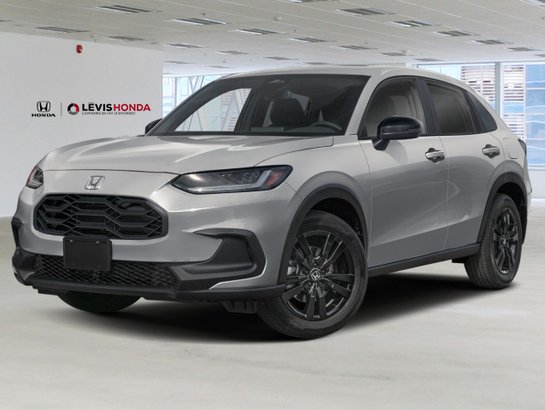
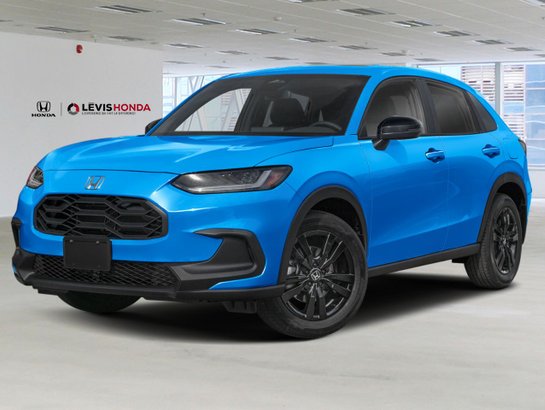
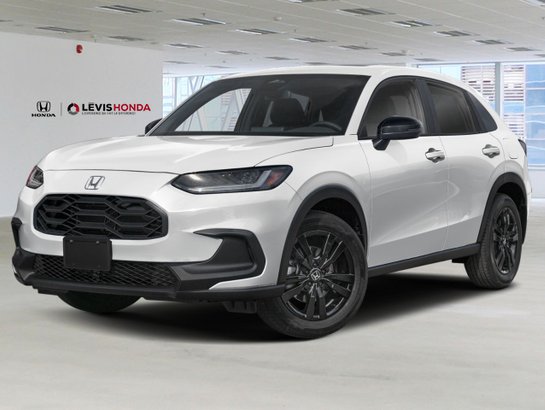
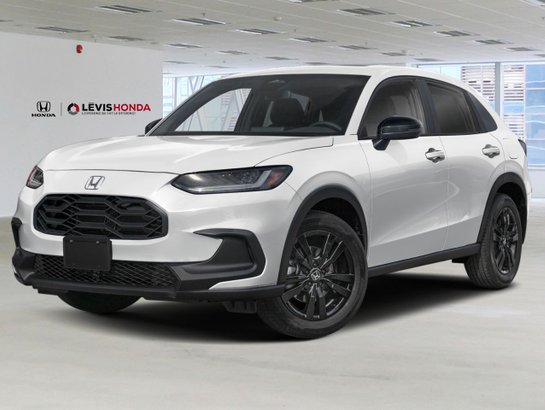
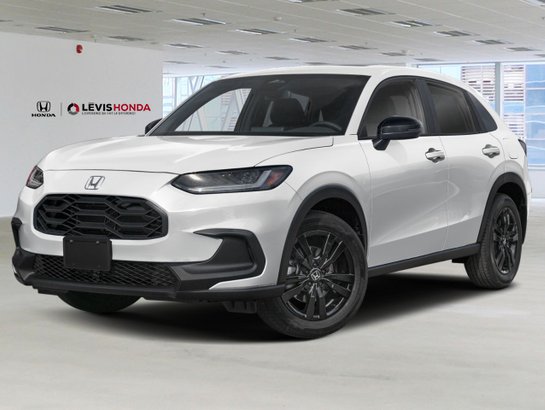
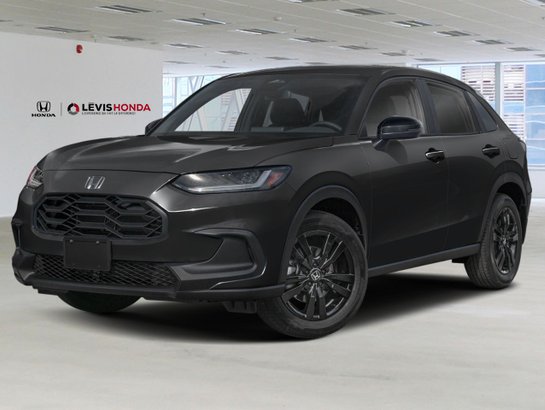
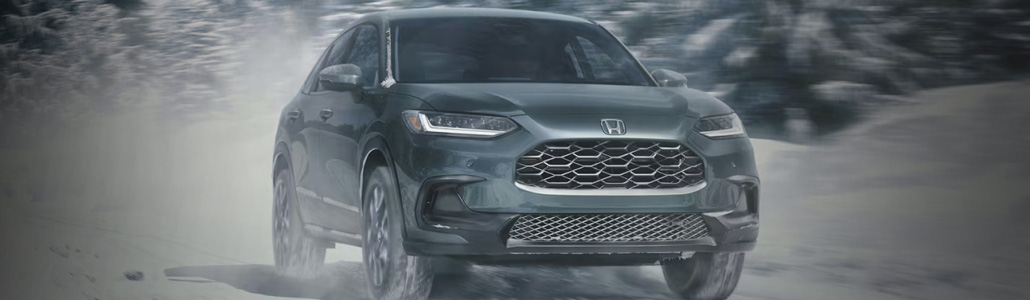
The 2027 Honda HR-V is an excellent entry point into the Honda SUV lineup. With its subcompact format, it is particularly well suited to drivers looking for a vehicle that is easy to park, enjoyable to drive and versatile enough to handle the different seasons.
Under the hood, the 2027 HR-V is equipped with a 2.0-litre four-cylinder engine producing 158 horsepower and 138 lb-ft of torque. This engine is paired with a continuously variable transmission (CVT), designed to deliver smooth driving and controlled fuel consumption.
For drivers who travel daily between Lévis and Quebec City, the HR-V represents an interesting compromise between manoeuvrability and interior space. Its size makes urban driving easier, particularly in busy parking lots or snow-covered streets.
The Real Time AWD system with Intelligent Control, offered depending on the trim, is a valuable advantage in winter. It can automatically transfer some torque to the rear wheels when traction conditions require it.
The HR-V also offers a Snow drive mode, which adapts certain vehicle responses to make driving on slippery surfaces easier. Heated front seats, heated mirrors and remote start contribute to winter comfort. Sport and EX-L trims notably add a heated steering wheel.
Estimated combined fuel consumption reaches 8.3 L/100 km with front-wheel drive and 8.7 L/100 km with all-wheel drive. Cargo space ranges from 691 to 1,559 litres depending on the seating configuration.
The 2027 HR-V is therefore particularly well suited to individuals, couples and small families who want an efficient and practical SUV for everyday driving.
The 2027 Honda CR-V occupies a particularly interesting middle position in the Honda lineup. More spacious than the HR-V, it offers an excellent balance of comfort, fuel efficiency and versatility.
The CR-V offers a 1.5-litre turbocharged gasoline engine producing approximately 190 horsepower, as well as a hybrid powertrain combining a 2.0-litre gasoline engine with two electric motors. The latter develops a combined 204 horsepower and an announced 247 lb-ft of torque on the current generation.
These characteristics make the CR-V Hybrid an interesting option for drivers who cover long distances or who want to reduce fuel consumption without moving to a fully electric vehicle. Final specifications for the 2027 Canadian model year will nevertheless need to be confirmed according to the trims offered.
In winter, available all-wheel drive is an important advantage. It helps improve traction when roads become snowy or slippery. The CR-V also stands out for its balanced road manners, elevated driving position and comfortable cabin.
For families in Lévis that regularly transport children, sports bags or outdoor equipment, the CR-V’s interior space is an advantage over the HR-V. Its spacious rear seat and generous cargo area make both daily travel and weekend getaways easier.
The hybrid powertrain is particularly interesting in urban driving, where the electric system can help reduce fuel consumption. Higher consumption should nevertheless be expected during periods of extreme cold, notably because of cabin heating and road conditions.
The 2027 Honda CR-V is therefore a balanced choice for families looking for a comfortable, efficient and versatile SUV.

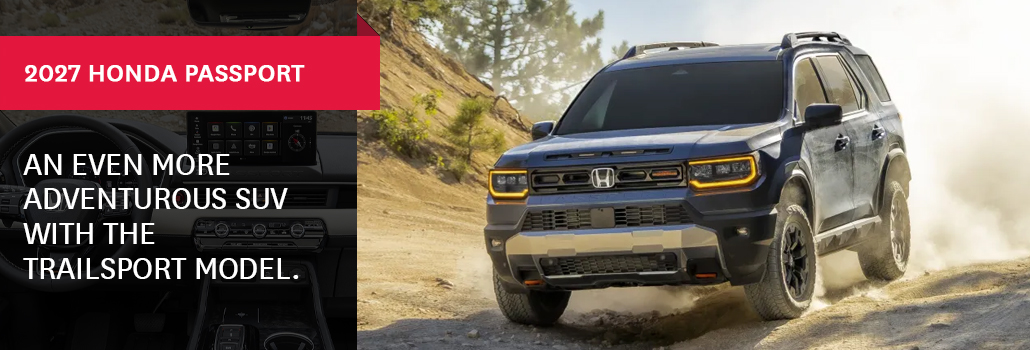
For drivers looking for more power and capability suited to difficult roads, the 2027 Honda Passport stands apart clearly from the other models in this comparison.
It is equipped with a 3.5-litre V6 engine producing 280 horsepower and 258 lb-ft of torque. Unlike the HR-V and CR-V, the Passport uses a larger-displacement naturally aspirated engine paired with a 10-speed automatic transmission.
Its i-VTM4 all-wheel-drive system with variable torque distribution helps improve traction on different surfaces. It is accompanied by seven drive modes: Normal, ECON, Snow, Sport, Tow, Trail and Sand.
This versatility is an advantage for drivers who regularly use secondary roads, snow-covered roads or cottage access roads. Snow mode adapts vehicle behaviour to slippery surfaces, while Trail and Sand modes address more specific situations.
The 2027 Passport also stands out with 245 mm of ground clearance, greater than the HR-V. Its off-road-tuned suspension and all-terrain tires contribute to its adventurous character.
Honda TrailWatch technology provides camera views of the area around the vehicle, which can be useful when manoeuvring through tight passages or uneven terrain. Hill Descent Control is another relevant feature on difficult slopes.
Inside, the Passport offers five seats and a large cargo area with 1,246 litres behind the second row, expanding to 2,356 litres when the rear seats are folded. Heated front seats, a heated steering wheel and remote start are particularly appreciated during Quebec winters.
Estimated combined fuel consumption is 11.7 L/100 km. More fuel-intensive than the HR-V, it compensates with power, space and towing capability announced at up to 2,268 kg depending on conditions and proper equipment.
For outdoor enthusiasts and drivers looking for a rugged SUV, the 2027 Passport is a particularly interesting option.
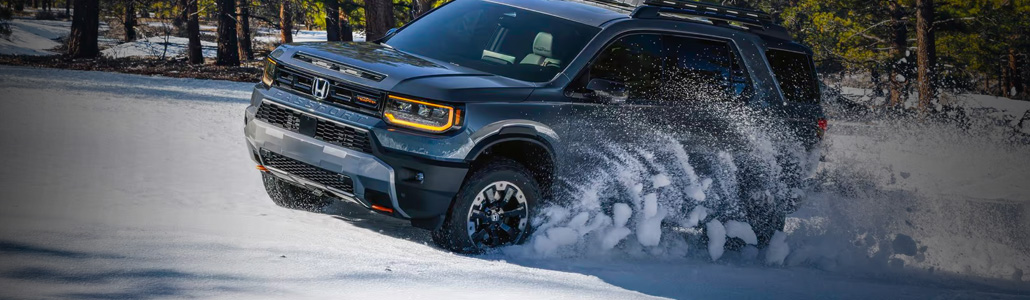
The 2027 Honda Pilot stands out primarily for its larger format and three-row seating configuration. It is aimed at larger families and drivers who regularly need to carry several passengers.
Unlike the Passport, which prioritizes five seats and a large cargo area, the Pilot focuses on passenger capacity. This difference is often the first selection criterion between the two models.
The current Pilot generation uses a 3.5-litre V6 engine paired with a 10-speed automatic transmission. Its i-VTM4 all-wheel-drive system, offered depending on the trim, can distribute torque between the wheels to improve traction in different conditions.
Final specifications for the 2027 Honda Pilot in the Canadian market will need to be confirmed before assigning precise horsepower, fuel-consumption or cargo-capacity figures to the new model year.
For families in Lévis that need to carry several children, child seats or a lot of luggage, the Pilot is nevertheless a model worth considering. Its three rows can accommodate more passengers than the HR-V, CR-V and Passport.
In winter, its larger format can also be an advantage for long family trips, particularly when several occupants need to travel comfortably with their belongings.
The Pilot therefore stands out less for compact size or fuel consumption than for family versatility. It is especially well suited to drivers for whom passenger space is a priority.
| Feature | 2027 Honda HR-V | 2027 Honda CR-V | 2027 Honda Passport | 2027 Honda Pilot |
|---|---|---|---|---|
| Category | Subcompact SUV | Compact SUV | Midsize SUV | Three-row midsize SUV |
| Powertrain | 2.0 L 4-cylinder | 1.5 L turbo or 2.0 L hybrid | 3.5 L V6 | 3.5 L V6 on the current generation |
| Horsepower | 158 hp | Approx. 190 hp gasoline or 204 hp hybrid | 280 hp | To be confirmed for 2027 |
| Torque | 138 lb-ft | 247 lb-ft for the hybrid | 258 lb-ft | To be confirmed for 2027 |
| Transmission | CVT | Gasoline CVT; hybrid electric drive system | 10-speed automatic | 10-speed automatic on the current generation |
| All-wheel drive | Real Time AWD available | Available depending on trim | Standard i-VTM4 | i-VTM4 available on the current generation |
| Combined fuel consumption | 8.3 to 8.7 L/100 km | To be confirmed for Canada in 2027 | 11.7 L/100 km | To be confirmed for 2027 |
| Seating capacity | 5 | 5 | 5 | Up to 8 depending on configuration |
| Maximum cargo volume | 1,559 L | To be confirmed depending on Canadian trim | 2,356 L | To be confirmed for 2027 |
| Ground clearance | 177.8 to 185.4 mm | To be confirmed for 2027 | 245 mm | To be confirmed for 2027 |
| Main advantage | Manoeuvrability and efficiency | Versatility and hybrid efficiency | Power and off-road capability | Space for larger families |
HR-V and Passport data comes from Canadian 2027 specifications. Certain CR-V and Pilot characteristics are based on their current generations and remain to be confirmed for the 2027 model year in Canada.
All-wheel drive is one of the most important criteria for drivers who regularly travel on snow-covered Quebec roads.
The HR-V uses the Real Time AWD system with Intelligent Control. It is particularly well suited to everyday driving and helps improve traction when the wheels begin to lose grip.
The CR-V also offers available all-wheel drive, complementing its role as a versatile family SUV. For drivers who alternate between city traffic, highway driving and secondary roads, this combination provides an interesting balance.
The Passport stands out with its i-VTM4 system and numerous drive modes. Its high ground clearance and off-road-tuned suspension give it an advantage on more difficult roads, particularly when driving through accumulated snow or on uneven surfaces.
The Pilot, when equipped with i-VTM4, instead prioritizes stability and traction in a vehicle designed to carry more passengers.
It is important to remember, however, that no all-wheel-drive system can replace the grip provided by suitable winter tires. On ice or during emergency braking, tire quality, speed and careful driving remain decisive.
For drivers who travel long distances every day between Lévis, Quebec City and surrounding municipalities, fuel consumption can significantly influence vehicle choice.
The HR-V is an interesting option thanks to estimated combined fuel consumption of 8.3 to 8.7 L/100 km. Its compact size and 158-horsepower engine are particularly well suited to regular commuting.
The CR-V Hybrid also deserves particular attention. Its electrified powertrain promotes better fuel efficiency, especially in urban driving. It combines this advantage with a more spacious cabin than the HR-V.
The Passport is aimed at a different type of buyer. Its higher fuel consumption is explained in part by its V6 engine, size and off-road capability. In return, it offers substantial cargo volume and greater towing capacity.
The Pilot prioritizes passenger space. Its three rows of seating make it a practical solution for larger families, even though the amount of luggage space available varies depending on how many seats are in use.
The best choice therefore depends on how the vehicle will actually be used. A driver who usually travels alone will not necessarily have the same needs as a family of six or an outdoor enthusiast who regularly carries bulky equipment.
Comfort equipment becomes especially important when temperatures fall below freezing.
The 2027 HR-V notably offers heated front seats, heated mirrors and remote start. Sport and EX-L trims add a heated steering wheel, a particularly pleasant feature on cold mornings.
The CR-V emphasizes family comfort and connectivity technologies. Depending on the trim, equipment such as heated seats, a heated steering wheel and remote-start functions can improve the winter driving experience.
The 2027 Passport offers a particularly complete package, notably including a heated steering wheel, heated front seats, a 12.3-inch touchscreen and Honda TrailWatch technology. Certain trims add heated rear seats and ventilated front seats.
The Pilot focuses primarily on comfort for larger families, with a cabin designed for long trips and technologies intended to make life on board easier.
All four models also benefit from Honda Sensing driver-assistance technologies, which can include the Collision Mitigation Braking System, Lane Keeping Assist and Adaptive Cruise Control.
These systems provide additional assistance, but their effectiveness can be reduced by snow, ice, fog or poor visibility. The driver must always adapt driving to conditions.
Drivers’ needs vary considerably depending on their driving habits.
For someone who uses their vehicle mainly in the city, the 2027 Honda HR-V is a practical option thanks to its manoeuvrability, reasonable fuel consumption and available all-wheel drive.
For a family looking for more space without necessarily needing a third row, the 2027 Honda CR-V is a balanced choice. Its hybrid powertrain adds an advantage for drivers concerned about fuel consumption.
For outdoor getaways, snow-covered roads and recreational activities, the 2027 Honda Passport stands out for its ground clearance, V6 engine and advanced all-wheel-drive system.
Finally, for larger families looking for a vehicle capable of seating up to eight occupants depending on configuration, the Honda Pilot remains the most appropriate model among these four SUVs.
At Lévis Honda, our team can help you compare the different options. You can browse our new vehicle inventory to discover models currently available.
The 2027 Honda Passport stands out with its i-VTM4 all-wheel-drive system, seven drive modes and 245 mm of ground clearance. It is particularly interesting for difficult roads and winter getaways. The HR-V and CR-V remain highly relevant for everyday travel on maintained roads.
The HR-V is a subcompact SUV that prioritizes manoeuvrability and efficiency. The CR-V is more spacious and notably offers a hybrid powertrain, making it an interesting option for families and drivers looking for more comfort.
The Passport has characteristics particularly well suited to difficult roads, including high ground clearance and off-road-tuned suspension. The Pilot instead prioritizes passenger space and family versatility. The best choice therefore depends on the driver’s needs.
The HR-V has estimated combined fuel consumption of 8.3 L/100 km with front-wheel drive and 8.7 L/100 km with all-wheel drive. The CR-V Hybrid is also a very efficient option. Final Canadian ratings for the 2027 CR-V will need to be confirmed before establishing a precise ranking.
The Honda Pilot is the only one of the four models to offer three rows of seating and can accommodate up to eight people depending on configuration. The HR-V, CR-V and Passport are five-passenger vehicles.
The Honda CR-V generally represents an excellent compromise for a family of four thanks to its interior space, comfort and versatility. The HR-V can also suit a small family, while the Passport offers greater capability for outdoor activities.
You can discover Honda models at Lévis Honda, review available vehicles and book a test drive. Our team can help you compare the different trims according to your needs and budget.
The 2027 Honda HR-V, 2027 Honda CR-V, 2027 Honda Passport and 2027 Honda Pilot each meet different needs, but all share the same goal of providing comfort, versatility and driving technologies.
The HR-V prioritizes efficiency and ease of use, the CR-V offers an interesting balance between fuel economy and family space, the Passport stands out for its off-road capability, while the Pilot is a solution suited to larger families.
For drivers in Lévis and the Quebec City area, the best Honda SUV is the one that matches daily travel, family habits and the road conditions encountered.
Browse our new Honda inventory, discover the models that interest you and book a test drive. For any questions about features, trims or availability, feel free to contact Lévis Honda.